EcoFlow Delta is one of the most recognizable portable power stations on the market, built for users who need reliable off-grid energy, fast recharging, and enough output to run household appliances, power tools, and outdoor gear. In this EcoFlow Delta review, we cover its design, performance, charging flexibility, safety features, and whether it delivers enough value for campers, RV owners, and emergency backup user.
Design & Build Quality
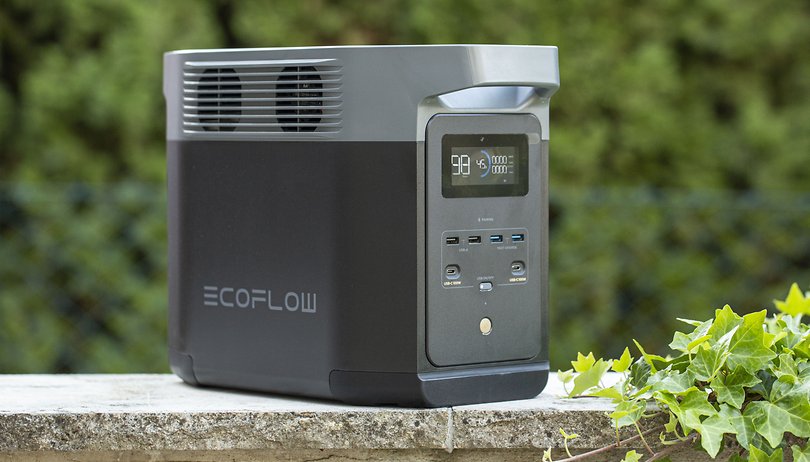
The EcoFlow Delta uses a modern industrial design that feels both premium and purpose-built. It combines a strong aluminum frame with reinforced corners, making it more durable than many plastic-heavy portable power stations in its class.
At 30.9 lbs and measuring 15.7 x 8.3 x 10.6 inches, it is substantial but still manageable for most users. The integrated carry handle helps with one-person transport, while the compact footprint makes it easier to store in vehicle trunks, RV bays, or home emergency kits.
Power Output & Capacity
One of the biggest strengths of the original EcoFlow Delta is its power delivery. It comes with a 1260Wh lithium-ion battery capacity, which is large enough to support a wide range of devices during camping, power outages, or jobsite use.
The port selection is well-rounded for both home and outdoor use:
- ▸6 x AC outlets
- ▸2 x USB-C ports
- ▸4 x USB-A ports
- ▸2 x 12V DC ports
- ▸1 x 12V carport output
It also supports surge loads of up to 3300 watts, which is useful when starting devices with high initial power draw, such as refrigerators, air conditioners, compressors, and power tools.
Charging Options & Speed
The EcoFlow Delta offers multiple charging methods, which is important for users who need flexibility in different environments.
- ▸AC wall charging: One of the Delta’s strongest selling points. It can recharge fully in under 2 hours using a standard household outlet.
- ▸12V car charging: Useful for road trips, RV travel, and situations where wall power is not available.
- ▸Solar charging: Compatible with EcoFlow solar panels and third-party panels. The built-in MPPT charge controller helps improve efficiency in variable sunlight conditions.
With compatible solar panels and direct sunlight, the Delta can recharge in roughly 4 hours, though real-world speed will depend on panel wattage, weather, and temperature.
Display & User Interface
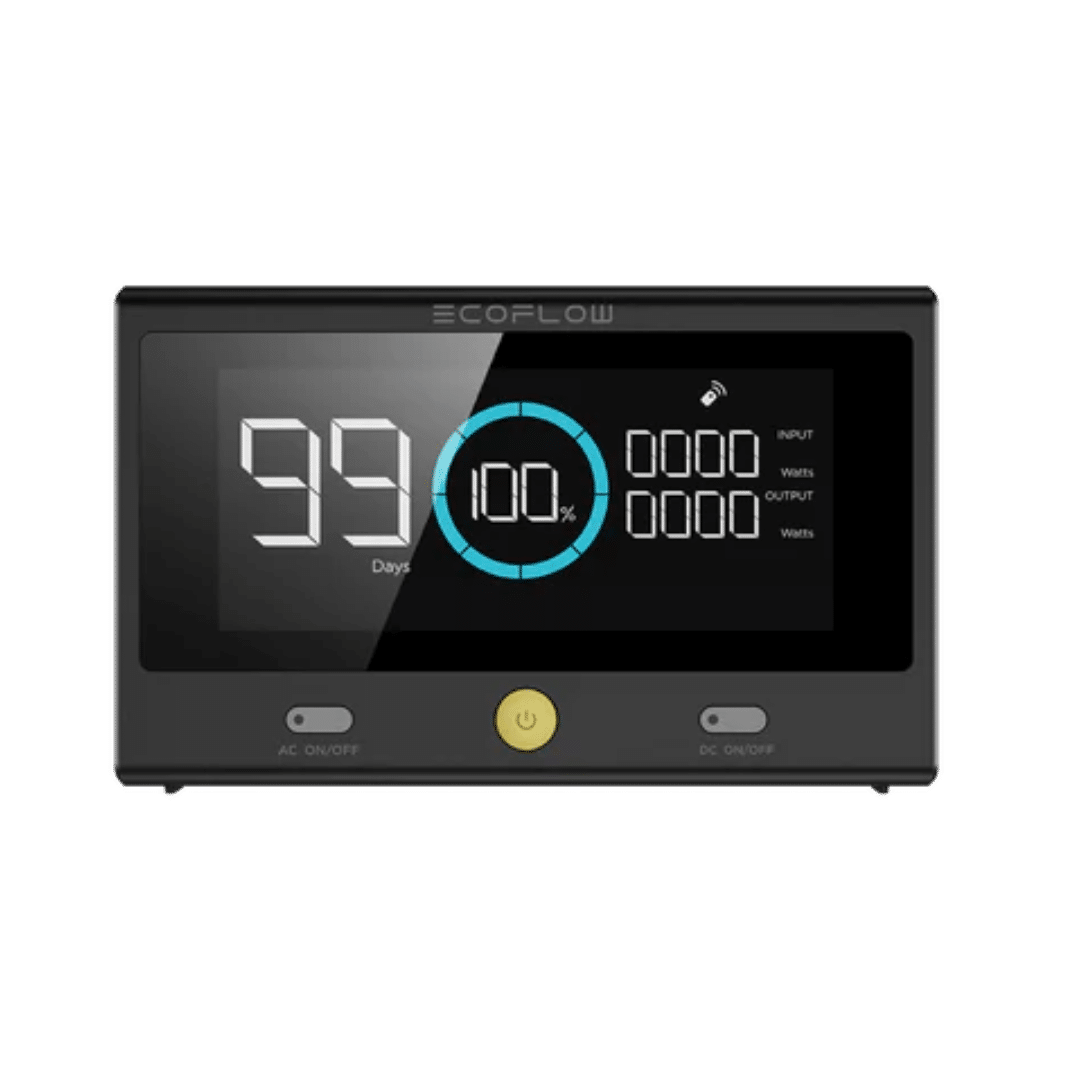
The unit includes a clear LCD screen that shows essential information, such as remaining battery level, input power, output power, estimated runtime, and system alerts. This makes it easy to monitor energy usage at a glance.
Some settings can be adjusted directly through the touch interface, and there is also a mobile app option for remote monitoring. The app can be useful for tracking power consumption, adjusting charging parameters, and receiving maintenance notifications.
Safety Features & Certifications
EcoFlow has included several safety features to protect both the unit and connected devices:
- ▸Overvoltage protection
- ▸Overcurrent protection
- ▸Over-temperature protection
- ▸Short-circuit protection
An internal cooling fan helps manage heat during high-power use, which can reduce thermal throttling and extend component life. The Delta also carries FCC, CE, and RoHS certifications, making it compliant with common international safety and environmental standards.
Portability & Durability
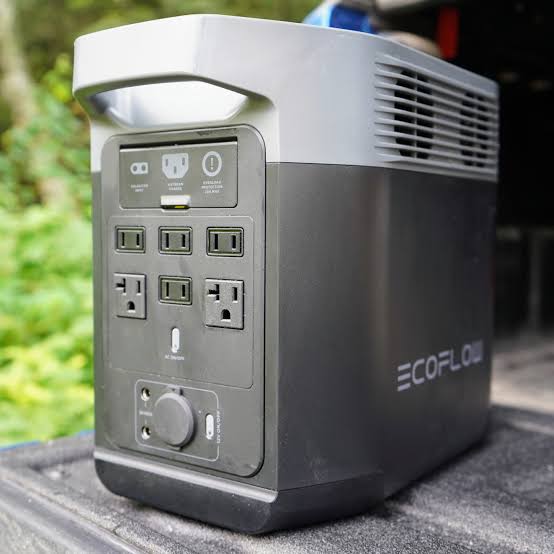
The EcoFlow Delta is not the lightest power station in its category, but it is still portable enough for most off-grid scenarios. The balanced weight distribution and top handle make it easier to carry between vehicles, campsites, and emergency locations.
Its aluminum frame and reinforced housing provide better impact resistance than budget alternatives, while sealed port covers help protect against light rain and splashes. However, it should not be fully submerged or used in heavy rain.
EcoFlow Delta Series: Model Comparison
The EcoFlow Delta lineup has evolved across multiple generations, with each model tailored to different power needs, budgets, and use cases. Below we compare the core specifications of the original EcoFlow Delta, Delta 2, Delta 2 Max, and the latest Delta 3.
| Specification | Delta (Original) | Delta 2 | Delta 2 Max | Delta 3 |
|---|---|---|---|---|
| Battery Capacity | 1260Wh | 1024Wh (expandable) | 2048Wh (expandable) | 1536Wh (expandable) |
| Battery Chemistry | NCM Lithium-ion | LFP (LiFePO4) | LFP (LiFePO4) | LFP (LiFePO4) |
| Rated AC Output | 1800W | 1800W | 2400W | 2400W |
| Surge Power | 3300W | 2700W | 3600W | 3600W |
| AC Full Recharge | ~1.8 hours | ~1.2 hours | ~1.8 hours | ~1.2 hours |
| Weight | 30.9 lbs | 27.0 lbs | 42.3 lbs | 33.1 lbs |
| Best For | Balanced all-around use | Budget & expandability | High-capacity home backup | Latest tech & fastest charging |
Which Delta Model Should You Choose?
- ▸EcoFlow Delta 2 — The best entry point into the Delta lineup. It uses long-lasting LFP battery chemistry, charges even faster via AC, and supports expandable battery packs. Ideal for casual camping, weekend trips, and users who want a lighter, more durable unit.
- ▸EcoFlow Delta 2 Max — Designed for heavy-duty use and extended off-grid stays. With double the base capacity and higher 2400W output, it suits full-time RV living, longer camping trips, and whole-room emergency backup.
- ▸EcoFlow Delta 3 — The latest generation with improved battery efficiency, faster charging, and smarter app features. It delivers a strong mix of capacity, power, and portability, making it the top choice for users who want the newest technology and best all-around performance.
- ▸Original EcoFlow Delta — Still a solid workhorse with proven reliability and strong surge performance. It remains a good value option, especially for users who prioritize high surge capacity over expandability and LFP battery life.
EcoFlow Delta vs. Competitors
The portable power station market includes strong competitors such as Jackery, Goal Zero, and Anker. These brands offer reliable options, but the EcoFlow Delta lineup stands out in a few areas:
- ▸Higher surge power capacity
- ▸Faster AC charging speed
- ▸More ports for simultaneous device use
- ▸Built-in MPPT solar charging support
For users who need to run higher-wattage devices or recharge quickly, the Delta series is often more practical than similarly priced alternatives.
Common Use Cases
The EcoFlow Delta works well in a variety of situations:
- ▸Camping & outdoor recreation: Powering coolers, lights, cooking devices, cameras, and phones.
- ▸RV & van life: Supporting small appliances, lighting, and entertainment systems.
- ▸Home emergency backup: Keeping refrigerators, lights, medical devices, and communication equipment running during power outages.
- ▸Jobsite use: Running power tools, chargers, and lighting where grid power is unavailable.
- ▸Tailgating & events: Powering speakers, coolers, screens, and catering equipment.
Customer Support & Warranty
EcoFlow generally offers responsive customer support, including documentation, FAQs, and community resources. The Delta lineup comes with a 2-year manufacturer warranty, which covers defects in materials and workmanship. Extended warranty options may also be available for users who want additional coverage.
Sustainability Efforts
EcoFlow focuses on clean energy products, and its power stations are designed as alternatives to gas generators. Compared with traditional generators, the Delta produces no direct emissions during use, operates more quietly, and reduces reliance on fossil fuels for portable power.
The company also emphasizes energy efficiency, renewable energy education, and partnerships that support reforestation and clean energy access. The shift to LFP battery chemistry in newer models also improves long-term environmental footprint through longer product lifespans.
Battery Life & Long-Term Performance
Actual runtime depends on the devices being powered, but the original Delta can run typical camping loads for many hours on a single charge. For example, a 100W mini-fridge will run much longer than a 500W portable air conditioner.
Newer Delta 2 and Delta 3 models use LFP (LiFePO4) batteries, which support significantly more charge cycles and retain capacity longer than the original NCM chemistry. With proper care, including avoiding extreme temperatures and maintaining regular charging cycles, all Delta models should remain usable for years of regular use.
✓Pros
- ▸Strong power output with high surge capacity
- ▸Fast AC recharge across the full lineup
- ▸Built-in MPPT solar charging support
- ▸Large port array for multiple devices
- ▸Sturdy build with reliable safety features
- ▸Useful LCD screen and app monitoring
●Cons
- ▸Higher price than entry-level power stations
- ▸Heavier than compact low-capacity models
- ▸May be oversized for casual phone charging only
- ▸Solar recharge speed depends on weather and panels
Final Verdict
The EcoFlow Delta lineup remains one of the strongest options in the portable power station market. The original Delta set a high bar for fast charging and high surge output, while the Delta 2, Delta 2 Max and Delta 3 improve on that foundation with longer-lasting LFP batteries, expandable capacity, and smarter software features.
For most users, the Delta 2 offers the best balance of price, performance, and long-term durability. If you need maximum capacity for home backup, the Delta 2 Max is the clear pick. If you want the newest technology and fastest charging, the Delta 3 is worth the premium. No matter which model you choose, the Delta series delivers reliable, versatile off-grid power that works for camping, RV life, and emergency preparedness.